

Cameron’s third chapter in The Artist’s Way is about recovering a sense of power.
Part of that work, she argues, requires us to reckon with our anger. Anger is a map, a signal pointing toward what matters, a guidebook revealing where our boundaries lie.
We often tell ourselves that fear of rejection or judgment keeps us from moving forward. And sometimes it does. We internalize disappointments, begin to doubt ourselves, and find reasons to put off the things we want to do.
But perhaps there is something else beneath that fear.
Perhaps we are also angry because we know what we want, and pursuing it would require us to act. In a frightful and sometimes lonely world, the possibility of success reminds us that we still have choices to make.
And if we still have choices to make, are we ultimately to blame for our rejections, our failures, and our setbacks?
Academics have an odd relationship to both anger and fear.
We are trained to face criticism, embrace it, and learn from it. But not all criticism feels warranted, and anger at the biased or narrow-minded reviewer can feel almost like part of the job.
For academics, then, reclaiming power is not simply about withstanding a brutal no. It is also about who gets to say no, and whose judgment we have learned to trust.
Every opportunity comes with a gate.
There may be a committee, an editorial board, a selection panel, or a fellowship director standing on the other side. We can choose to approach that gate, but we cannot always control what happens when we get there.
The trouble begins when we decide, before even trying, that we already know the answer. We never enter the room. Or, if we do, we settle into a corner rather than risk stepping toward the podium.
Sometimes the doors that close on us are the ones we never knock on.
From the Pages
Early in the fourth week of daily journaling, while randomly browsing social media, I ran across an advertisement for a virtual writing residency.
I read it, and then kept scrolling.
By the time I sat down to write my journal entry later that morning, I had already assembled the reasons why it didn’t make sense to apply and wrote them out. It is not for me. It is not the right time. I’m not ready to take advantage of it.
Then I wrote:
But then again, why not?
I had asked a different version of that same question two weeks earlier in this very newsletter, wondering whether I would even notice myself self-selecting out of an opportunity in the first place.
Apparently, I do notice, although usually after the tab has already been closed. It made me angry to realize how fear of the unknown has made the familiar seem more appealing.
The same pattern appeared twice more over those two weeks, attached to opportunities I’d wanted to explore for years but had never formally inquired about because I feared it might be too late.
I wrote that I needed to reach out to a colleague, then that I needed, at the very least, to send an email. Neither entry records an email being sent, only a decision to decide, which, I guess, is its own kind of avoidance.
What makes this harder to explain away is that in the same stretch of morning pages I also wrote that I don’t need anyone to convince me that I’m worthy enough, or authorized enough, to pursue my intellectual interests, or creative ideas, or personal projects. I simply need to do it.
I believe that sentence, sincerely, and I’ve done so, even in the context of this very newsletter, in this very series. Although I wrote it as a stream of consciousness, I meant every word. But I still need to send that email, and I’m not quite sure what I’m waiting for.
That same week, a stranger mailed me a handwritten card to thank me for an essay I had published in a magazine. Another left a voicemail on my office phone about the same piece.
Is this fan mail? I wrote in my journal, half joking, mostly surprised, uncertain what to make of it all. I was grateful for both, but I also felt a little angry. How many possibilities had I talked myself out of before I ever gave them a chance?
Have I been holding back, all these years?
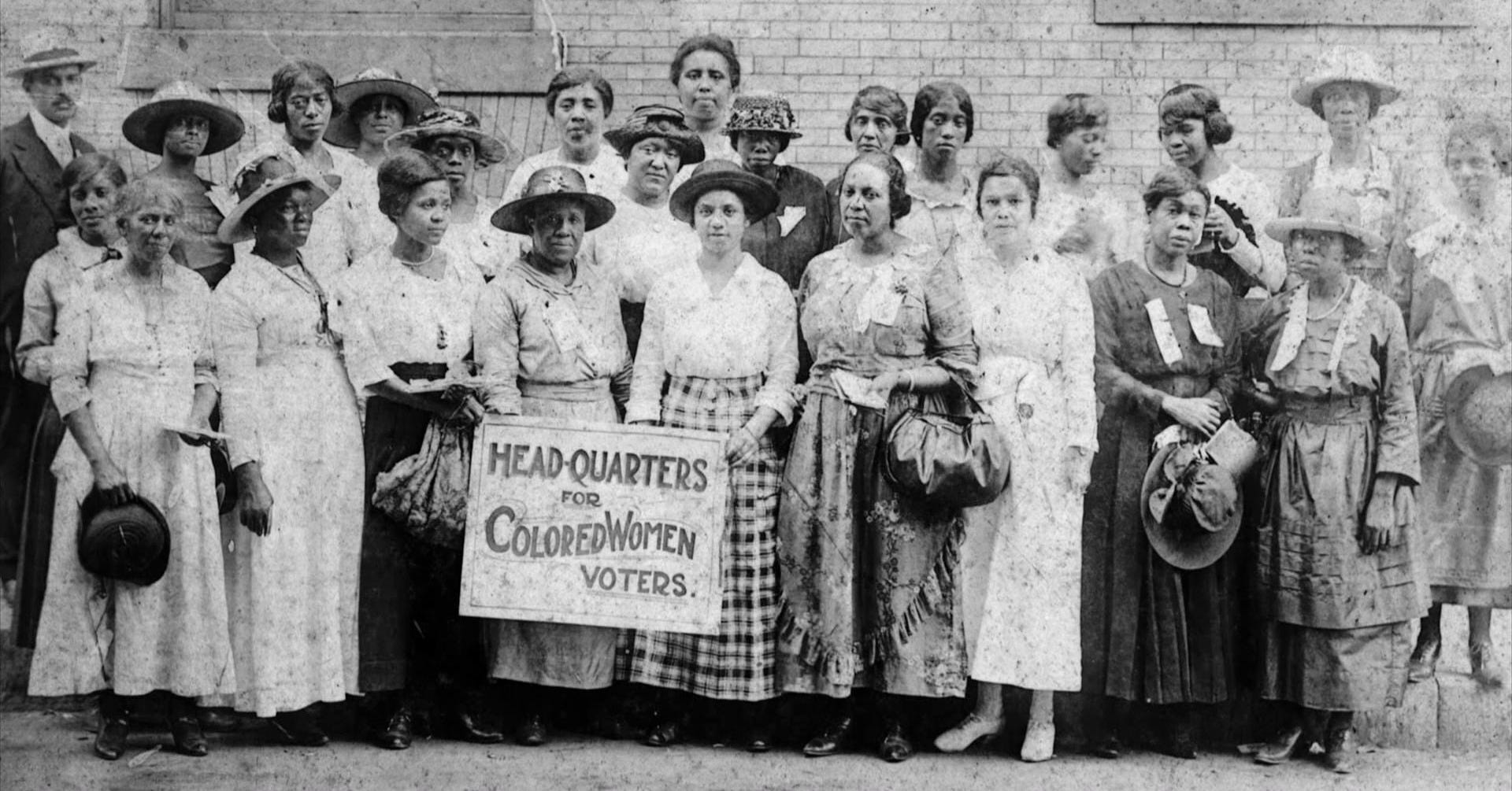
I read Ida B. Wells a few days later. It felt unrelated at first, perhaps even irrelevant, until I realized her relationship to power demanded a very different approach to anger.
The Shelf
Ida B. Wells published Southern Horrors in 1892, at a moment when Black Americans faced the threat of death for speaking out against racial terror.
She gathered evidence to challenge the racist claims used to justify lynching, then published it, not as a request to be seen, but as an assertion of her authority to speak.
Zora Neale Hurston, sitting on the gatepost, claimed the freedom to be seen on her own terms. Wells took a different approach. She confronted the lies sustaining a racial hierarchy in which White men claimed authority to police Black life.
Ultimately, her press was destroyed, and Wells was driven out of Memphis under the threat of death. And for what?
It was her truth-telling that made it dangerous.
Cameron describes reclaiming our sense of power as the act of confronting the fear and shame that limit us, including the doubts that make us question our authority to speak.
Wells’s story reveals what this framework cannot fully capture. Sometimes our limits are not simply internalized. They are also imposed by a world willing to punish us for crossing them.
For Wells, speaking out meant confronting racial terror, economic retaliation, and the possibility of death. For scholars of color today, the stakes may be different, but the question of legitimacy remains familiar. We navigate institutions that can devalue our work, question our authority, or make speaking out costly.
Wells risked her life, her business, and her future by telling the truth and pursuing a calling that carried tremendous risk. In my journal, I wrote about the fear of sending an email that might give me insight into a possible future career pathway.
The comparison is obviously unequal.
The cost of sending an email is nothing beside the risk of death Wells faced for challenging the racial and gender hierarchies of her time.
I’ve been sitting with that.
The Alternative
Two weeks ago, I wrote about the pressure that scholars of color can feel to prove they have earned the right to speak. We learn to read that legitimacy through the CV:
What have you published? Where have you spoken? What have you studied?
Wells offers an alternative. She did not wait for an invitation to speak. She gathered the evidence, published her findings, and challenged the people whose authority rested on the lies she exposed.
Creative scholars can spend years trying to fit their ideas into existing frameworks, hoping that the right publication, credential, or invitation will finally give us permission to pursue the work we want to do.
But what if the work does not need that permission?
Wells reminds us that we can challenge the terms on which our authority is judged. We can create beyond the boundaries others have drawn for us. We can speak without waiting for someone else to decide that our voices deserve to be heard.
Recognition, institutional support, and professional opportunities matter. But they need not be the source of our belief in the legitimacy and value of what we have to say.
Perhaps reclaiming our power begins with asking who taught us what power is supposed to look like.
It means learning to trust our voices before someone else certifies them, and allowing our creative work to become an offering to the world—an expression of something divine within us.
We do not always know where that work will lead, who it will reach, or what it might make possible for someone else.
Maybe that is enough for now.
To create. To speak. To offer what we have.
And to allow that to stand on its own.
Becoming Full,

A Note to Reader: Chapter Four of The Artist’s Way is about integrity. In my syllabus, I’m reading it alongside Langston Hughes’s “The Negro Artist and the Racial Mountain.” See you on October 31st.
P.S. As always, thank you for reading this week’s issue of The Tenure Track. If you found this article helpful, share it with a friend. If it moved you, consider supporting with a paid subscription or buying me a coffee. Together, let’s continue to build a supportive and creative academic community.
Your support helps me create content that serves fellow scholars on the path.