

Cameron’s second chapter in The Artist’s Way is about identity, and the way people and habits can quietly transform it over time.
We all face barriers to claiming an identity as an artist, from the skeptics we encounter during childhood, to the well-meaning discouragers we encounter during early adulthood, to the unique life challenges that make it harder to believe you are what you say you are, or what you believe yourself to be.
Academics, however, have an unusual relationship to identity formation. Beyond our pedigree, our identity is certified by others in our field. A committee evaluates our contributions to the university, while our peers review the quality and impact of our scholarship.
Our CV serves, therefore, as a kind of “identity paper,” documenting everything we are authorized to claim.
I have been thinking about this lately because I write another newsletter called Freedom Papers, a name inspired by the historical documents that once served as evidence of a person’s freedom. In some ways, the academic CV functions similarly. It is our own institutional version of freedom papers—a record of the credentials, accomplishments, and recognitions that establish who we are allowed to be within the academy.
The question, then, isn’t whether I can withstand someone else’s skepticism about my work. I am trained to endure biting critique, or at least have been conditioned to accept it with a smile.
The question is, what happens when I want to claim something that my so-called identity papers do not certify?
Even more, would I even notice myself self-selecting out of opportunities in the first place?
As it turns out, I, like so many academics, often do not.
From the Pages
Early in the second week of daily journaling, I took inventory of my mental to-do list.
I listed every project, every deadline, every book and article and chapter I could think of, each ranked by urgency, payoff, and percent completion. This is a practice I often turn to when my schedule starts to become overwhelming.
Somewhere in the middle of making that list, I noticed that the edited volume I’m working on will situate me as someone confidently embracing an affiliation as a critical race theorist. Then I wrote that I should teach critical race theory as a standalone class in the future. A few days later, I wrote that I needed to add additional critical race theory citations to an article currently in revision, to help clarify my engagement with that scholarly tradition.
Once I zoomed out, I realized I had been making concrete moves toward claiming something I spent almost ten years not truly claiming out loud, and this came only five days after I first admitted my avoidance in my first week of daily morning pages.
I marked that first reminder as a side note, but I now see it as more than that. It signifies a shift in how I understand my scholarly identity, filed as an aside, in the middle of a long list of deadlines. That same week, I wrote that despite my doubts, some part of me truly believes I am meant to be an artist.
I have read that sentence several times now.
What does it mean to be an artist as an academic?
Is my writing my art? Will I make art on the side, reviving a childhood interest in drawing and painting? Am I kidding myself?
It is the only claim in my first two weeks of daily journaling that I could not write without first admitting doubt.
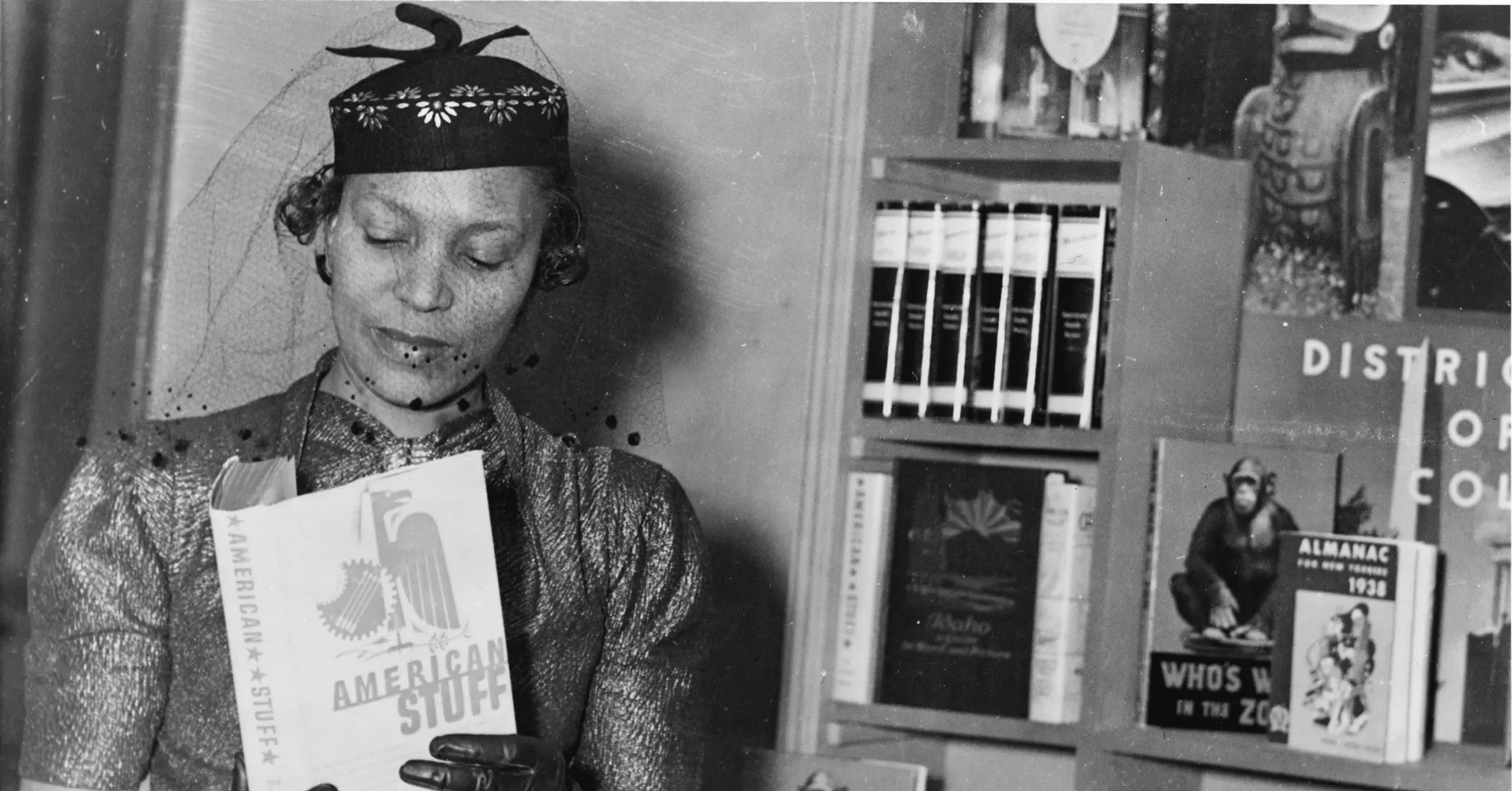
I read Zora Neale Hurston’s essay “How It Feels to Be Colored Me” a few days later, and she showed me how one might resolve the issue of identity, starting from a completely different vantage point.
The Shelf
In her 1928 essay, Hurston identifies the precise moment she discerned her Blackness.
She was simply Zora until the age of thirteen, a precocious young girl filled with a zest for life. Then, upon leaving Eatonville for school in Jacksonville, she became “colored.”
Decades later, I would be only a few months into my fourteenth year when I left a Black and Hispanic elementary school in the Bronx for an elite all-boys Jesuit high school on the Upper East Side of Manhattan. There, I too would suddenly become something remarkable, something to be looked at—an exceptional example for the Long Island boys who had not encountered Black students before me.
They studied the way I dressed, analyzed the cadence of my voice, and measured both against whatever biases they had collected from television and magazines about Black culture.
Hurston described being peered at cautiously from behind the curtains of the timid, and I found myself nodding in agreement. Only in my case, the curtains were crowded hallways, sideways glances, and homeroom stares.
Nobody asked her to identify herself.
Jacksonville certified her as colored upon arrival, much in the way a committee certifies a scholar as legitimate in the classroom, or the way a peer-reviewed journal certifies scholarly expertise on the page. Perhaps that is why Hurston spent the rest of the essay insisting on her own authority to say who she was.
Her porch, however, was a gallery, whereas mine was not.
Hurston writes about sitting out front while White travelers passed through Eatonville on their way to somewhere else, and rather than retreat inside, she would come down to the gatepost and make an occasion of herself, standing center stage, welcoming the many compliments that adorned her public spectacle.
Nobody passed through my neighborhood that way.
The only White people who came into my community with any regularity, as far as I can recall, were the police, and it did not occur to me until much later that being watched in that manner was both unremarkable and problematic. I learned the distinction walking the sidewalks of the Upper East Side, where the streets were cleaner and the officers were largely absent.
There, I understood for the first time that some people move through their days unobserved, unsurveilled, unidentified. And yet, like Hurston, I did not arrive in my new school building feeling diminished.
The South Bronx had already given me something a minority status could not take away—the music, the dance, the cipher, the oratory, the familial ties, the yearning for more—all built atop the shoulders of immigrants who had braved America’s shores with little more than hope in their hands.
Hurston wrote,
“I feel most colored when I am thrown against a sharp white background.”
For me, as for her, the sharpness clarified rather than wounded, revealing how far I had come and how far I had yet to go.
When Hurston described sitting in the drafty basement that is the New World Cabaret, feeling the jazz move through her body, she wrote,
“I dance wildly inside myself . . . My pulse is throbbing like a war drum.”
While her White companion sits motionless beside her, smoking calmly, she is describing a distance that is at once both cultural and spiritual. She does not pretend the distance is meaningless. In fact, it leaves her astonished at the reality of racial discrimination, confounded as to how one could deny themselves the pleasure of her company.
Ralph Ellison would later give a name to this uniquely Black experience—the tragicomic, the perception of suffering alongside its absurdity, the laughing and the grieving, both arriving together, refusing to be separated.
What troubles me now, reading Hurston, is that I could do what she did at thirteen. I knew who I was and where I had come from, and the fact that others found it remarkable did not by itself unsettle my resolve. In elementary school, I was not troubled by the police, nor by the kids in the hallway. I was a high honors student, after all, and used to being watched.
However, when I entered high school at the age of fourteen, questions of identity emerged from the place I had entered by choice—the elite academy, where the reward for qualifying yourself was belonging, albeit at the expense of an unnamed sacrifice.
The Gatepost
Ultimately, Cameron’s second chapter counsels protection—guard the emerging artist, limit exposure to skeptics, withdraw from the place where identity remains fragile. It is sound advice for a person who has somewhere to withdraw to.
Hurston, however, does the opposite. With Eatonville behind her, she disembarks from the riverboat, leaves Zora on the dock, and goes looking for another gatepost to sit on.
She never waited to be certified.
She certified herself, and determined that the travelers could make of it what they wished.
My own identity papers run several pages now, yet not one line of them says artist, save perhaps for the poem I published earlier this year. I have been treating that absence as an answer, but instead, perhaps, it is simply a matter of perspective.
Hurston ends the essay in an oddly beautiful way, admitting that she feels like a bag—a brown bag filled with a jumble of things, both priceless and worthless—and she suggests that if the contents of all the bags representing all the people of this land, white and red and yellow and brown, were poured out and swapped around, it would hardly change a thing.
“A bit of colored glass, more or less, would not matter.”
Perhaps the astonishing part of my own story, then, is not that others have, on occasion, denied themselves the pleasure of my company based on implicit biases or unconscious stereotypes, discouraging as that has been.
Rather, perhaps the astonishing part is that I have spent far too long denying myself the pleasure of me, keeping my own gatepost at a distance, and calling it all responsibility.
Perhaps I have always been an artist, after all.
Becoming Full,

Note to Reader: Chapter Three of The Artist’s Way is about power. In my syllabus, I’m reading it alongside Ida B. Wells’s Southern Horrors 1892 speech. See you on October 17th.
P.S. As always, thank you for reading this week’s issue of The Tenure Track. If you found this article helpful, share it with a friend. If it moved you, consider supporting with a paid subscription or buying me a coffee. Together, let’s continue to build a supportive and creative academic community.
Your support helps me create content that serves fellow scholars on the path.